From a Slime Mold to a Heart Drug — and What AI Does Next
Five decades on one question — how do muscles move? — chased from a slime mold all the way to an FDA-approved heart drug.
TL;DR
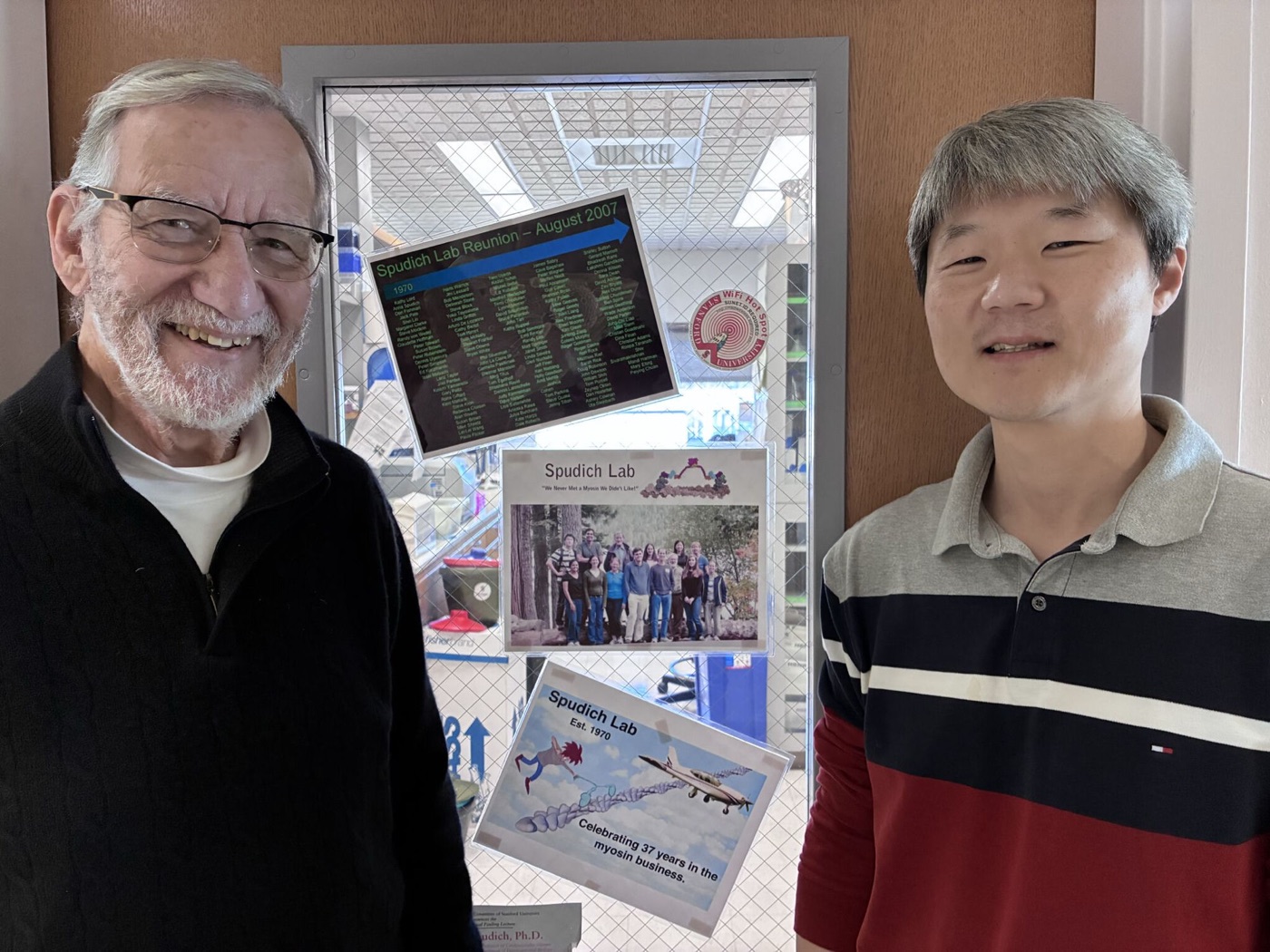
A 31-year-old cattle rancher can play with his kids again because of mavacamten, an FDA-approved drug for a thickened, overworking heart. Its story starts in 1971, with James Spudich studying how a slime mold moves [1]. That fifty-year arc — from an obscure amoeba to a first-in-class cardiac drug — is also a blueprint for AI: every step along the way was a measurement problem, and measurement is exactly where AI now compounds.
Start here: a story worth reading
Stanford Medicine magazine (Stanmed) has a piece I keep coming back to — “Innovation in bloom: How curiosity, collaboration and public funding grew into a lifesaving therapy,” by Krista Conger [1].
👉 https://stanmed.stanford.edu/mavacamten-heart-drug-power-discovery/
It’s the rare science story that earns the word beautiful: a fifty-year line that runs from an obscure amoeba in a Stanford lab to a pill that lets a young rancher play with his kids again. Read it. Then come back — because the arc it tells is, quietly, also a blueprint for how AI is about to accelerate biology.
The beautiful story, in short
The article opens not with a molecule but with a person: Jack Gardella, a 31-year-old cattle rancher diagnosed at 21 with hypertrophic cardiomyopathy (HCM) — a thickened, overworking heart. By 2024 he was short of breath doing ordinary things. Then he started mavacamten. His words: “I feel a lot better. I am not short of breath.” He could play with his children again [1].
How did a drug like that come to exist? Not from a drug program. It started with pure curiosity [1]:
- 1971 — an unlikely model organism. James A. Spudich chose Dictyostelium, a slime mold, because it was easy to grow and genetically tractable — “so far flung from what might today be considered important for drug discovery,” yet perfect for studying how actin and myosin generate motion.
- A happy accident. A grad student stumbled onto homologous recombination in Dictyostelium — meaning the lab could now swap myosin genes and watch what mutations do. Biochemistry married to genetics.
- Watching one molecule move. The lab learned to see myosin work directly — actin filaments gliding across a myosin-coated slide, then, with Nobel physicist Steven Chu, a laser trap measuring the force of a single motor. Spudich’s line: “Watching the actin filaments move across the myosin-coated glass at the same rate they move when your muscle contracts was a total wow moment.”
- The turn toward the heart. A 1990 Harvard discovery tied myosin mutations to inherited HCM. But human β-cardiac myosin couldn’t even be produced in the lab until 2010, when Colorado researchers cracked it — finally letting Spudich study the human disease protein directly.
- The puzzle and the dream. Founding MyoKardia in 2012, the team had its clinical lead in hand within six months — a cardiac-myosin inhibitor optimized from chemistry licensed from Cytokinetics. What they lacked was the why: HCM mutations didn’t make each myosin stronger. In 2014 that answer came to Spudich in a dream — the mutations increase the number of myosin heads pulling, a “mismatched game of tug-of-war” [2]. The dream explained why the molecule they already held could work.
- The medicine. That inhibitor — designed to take the excess heads offline — became mavacamten. Bristol-Myers Squibb bought the company in 2020; the FDA approved mavacamten (Camzyos) in 2022 for adults with symptomatic obstructive HCM — roughly $1 billion and fifty years after a curiosity about slime-mold motion [1].
The magazine’s thesis is the part worth underlining: lifesaving drugs grow out of curiosity-driven, publicly funded science with no guaranteed payoff. Nobody funds “esoteric amoeba biochemistry” to treat hearts. Five decades later, it helped produce the first mechanism-targeted therapy for obstructive HCM anyway.
The man behind it: James A. Spudich’s achievements
Strip the story to its load-bearing beams and you get one of the cleanest bench-to-bedside careers in modern biology:
| When | Contribution | What it was |
|---|---|---|
| early 1960s | Undergraduate research with J. W. Hastings | Got his first taste of the bench as an undergraduate with John Woodland “Woody” Hastings, a pioneer of bioluminescence and biological clocks — an early dose of curiosity-driven biology. |
| 1968 | PhD in the Kornberg lab | Trained under Arthur Kornberg (DNA-polymerase Nobelist) in Stanford’s biochemistry department — where he absorbed the purify every part, reconstitute the whole ethos that ran through everything after [3]. |
| 1968–71 | Postdoc with Hugh Huxley (MRC, Cambridge) | With Hugh E. Huxley — co-author of the sliding-filament theory — he did electron-microscopy structural biology of the thin filament: how the tropomyosin–troponin complex sits on actin and swings to switch contraction on and off (Spudich, Huxley & Finch, J. Mol. Biol., 1972) [4]. |
| 1971 | Actin purification (Spudich–Watt) | A clean, single-band actin prep still standard 50 years on — the reagent under nearly every myosin experiment [5]. |
| 1983–86 | In vitro motility assay | With Michael Sheetz, showed myosin + actin + ATP alone suffice for motion (1983); the Kron–Spudich assay (1986) made watching one motor routine [6][7]. |
| 1985 | A scientific lineage → kinesin | The reconstitution mindset radiated out: Ronald Vale (Stanford-trained in Spudich’s orbit), with Reese and Sheetz, discovered kinesin, the cargo motor of nerve cells [8]. |
| 1994 | Single-molecule force | With physicist Steven Chu — a laser-cooling Nobelist, whose optical trap is the very tool used here — they trapped one myosin in a laser and measured its force and step size (Finer, Simmons & Spudich), proving how the motor works by direct measurement [9]. |
| 1998 | Stanford Bio-X | Led the grassroots founding — pitched with Steven Chu to Provost Condoleezza Rice — of Stanford’s cross-disciplinary program, and became its first director [10]. |
| 2010 → | Human HCM mechanism | Once human β-cardiac myosin could finally be expressed (2010), he explained how point mutations cause HCM — by shifting myosin’s folded, auto-inhibited “super-relaxed” state and releasing too many heads [1]. |
| 2012 | Lasker Award | Shared the Albert Lasker Basic Medical Research Award with Sheetz and Vale for cytoskeletal motor proteins — often called “America’s Nobel” [11] [12]. |
| 2012 → 2022 | From mechanism to medicine | Co-founded MyoKardia (2012) → mavacamten, first-in-class cardiac myosin inhibitor, FDA-approved 2022 for symptomatic obstructive HCM [1]. (Earlier co-founded Cytokinetics → the myosin activator omecamtiv and the inhibitor aficamten (Myqorzo), FDA-approved Dec 2025 [13].) |
The through-line: purify the parts → measure the single molecule → understand the mutation → drug the mechanism.
Why this is now an AI story
Every step in Spudich’s arc was a measurement problem — and measurement is exactly where AI compounds:
- Structure → mechanism at scale. The auto-inhibited/super-relaxed state Spudich inferred from biophysics is now something AlphaFold-class models and MD can turn into testable hypotheses — which interfaces a mutation perturbs — before a protein is ever expressed. They don’t yet replace measuring head availability, SRX occupancy, or force; they narrow what to measure.
- One mutation → all of them. Protein language models and variant-effect predictors can prioritize thousands of MYH7 variants for expert review and functional testing — turning a one-at-a-time bench program into a genome-wide triage, with pathogenicity still established by mechanism, structure, and clinical evidence.
- One drug → a designed series. Generative design plus affinity prediction (FEP, ML scoring) aim to do for the next mavacamten what took a decade of screening: propose, rank, refine.
- The harness. Agentic pipelines can chain these — read the literature, predict a structure, score a variant, propose a molecule. That automated loop is what a modern Bio-X looks like.
The lesson from Spudich isn’t the technology; it’s the philosophy: reconstitute from trustworthy parts, measure the smallest unit directly, let mechanism drive the medicine. AI is just the newest instrument on that same bench — and, like a slime mold in 1971, the payoff may come from somewhere nobody would fund on purpose.
Further reading
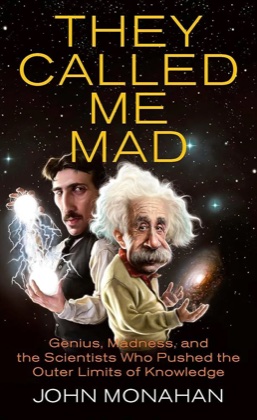
If the through-line here — obsessive curiosity pushing past what looks reasonable — is your kind of story, John Monahan’s They Called Me Mad: Genius, Madness, and the Scientists Who Pushed the Outer Limits of Knowledge (the book whose cover opens this post) is a fun tour of the same spirit — Tesla, Einstein, and a gallery of scientists who pushed the edge.
Sources
- Stanford Medicine, Krista Conger, “Innovation in bloom: How curiosity, collaboration and public funding grew into a lifesaving therapy” — https://stanmed.stanford.edu/mavacamten-heart-drug-power-discovery/
- Stanford Medicine News, “Mystery novel and dream spur key scientific insight” (2019) — the story behind the 2014 tug-of-war insight — https://med.stanford.edu/news/all-news/2019/03/mystery-novel-and-dream-spur-key-scientific-insight.html
- Stanford Medicine News, “Lasker Award goes to biochemist James Spudich” (2012) — biographical spine (PhD with Arthur Kornberg; postdoc with Hugh Huxley at Cambridge) — https://med.stanford.edu/news/all-news/2012/09/lasker-award-goes-to-biochemist-james-spudich.html
- Thin-filament structure — Spudich, J.A., Huxley, H.E. & Finch, J.T., “Regulation of skeletal muscle contraction. II. Structural studies of the interaction of the tropomyosin–troponin complex with actin,” J. Mol. Biol. 72(3):619–632 (1972) — https://pubmed.ncbi.nlm.nih.gov/4349760/
- Actin purification — Spudich, J.A. & Watt, S., “The regulation of rabbit skeletal muscle contraction. I. Biochemical studies of the interaction of the tropomyosin–troponin complex with actin…,” J. Biol. Chem. 246(15):4866–4871 (1971) — https://pubmed.ncbi.nlm.nih.gov/4254541/
- In-vitro motility (1983) — Sheetz, M.P. & Spudich, J.A., “Movement of myosin-coated fluorescent beads on actin cables in vitro,” Nature 303(5912):31–35 (1983) — https://pubmed.ncbi.nlm.nih.gov/6682486/
- Kron–Spudich motility assay (1986) — Kron, S.J. & Spudich, J.A., “Fluorescent actin filaments move on myosin fixed to a glass surface,” PNAS 83(17):6272–6276 (1986) — https://pubmed.ncbi.nlm.nih.gov/3462694/
- Kinesin: Vale, Reese & Sheetz, Cell 42:39 (1985) — https://www.cell.com/cell/abstract/S0092-8674(85)80099-4
- Single-molecule force — Finer, J.T., Simmons, R.M. & Spudich, J.A., “Single myosin molecule mechanics: piconewton forces and nanometre steps,” Nature 368(6467):113–119 (1994) — https://pubmed.ncbi.nlm.nih.gov/8139653/
- Stanford Bio-X history & timeline — https://biox.stanford.edu/about/biox-history
- Lasker Foundation, 2012 motor-proteins citation — https://laskerfoundation.org/winners/motor-proteins-that-contract-muscles-and-enable-cell-movements/
- Stanford Bio-X, “Lasker Award goes to biochemist James Spudich” — https://biox.stanford.edu/highlight/lasker-award-goes-biochemist-james-spudich
- Cytokinetics, “FDA Approval of MYQORZO (aficamten)…” (Dec 19, 2025) — https://ir.cytokinetics.com/press-releases/press-release-details/2025/Cytokinetics-Announces-FDA-Approval-of-MYQORZO-aficamten-for-the-Treatment-of-Adults-with-Symptomatic-Obstructive-Hypertrophic-Cardiomyopathy-to-Improve-Functional-Capacity-and-Symptoms/default.aspx
Sung, J. (2026). "From a Slime Mold to a Heart Drug — and What AI Does Next." LatentCell. https://latentcell.ai/posts/slime-mold-to-heart-drugCC BY 4.0 — reuse with credit.Full formats (APA · MLA · BibTeX) →