
About
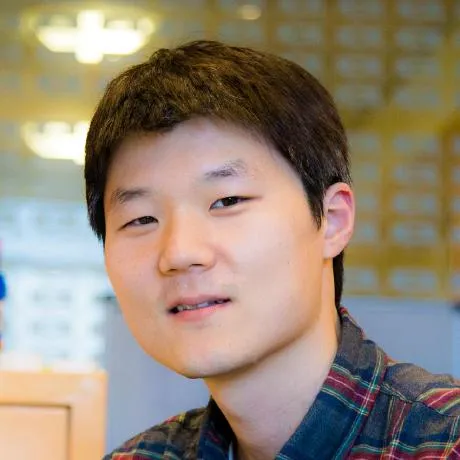
Hi — I'm Jongmin Sung, and I write Bio × AI.
As a kid I'd lie in the grass and stare at the night sky until it made me dizzy — that first hit of how does any of this actually work? never really wore off. It just kept changing scale.
It sent me down a ladder. I started in physics — a BS at POSTECH, then a PhD in Applied Physics at Stanford — because physics is where you go when you want the rules underneath everything. In grad school, in James Spudich's lab, I pointed those tools at biology: watching a single molecule of human β-cardiac myosin — the motor that powers every heartbeat — and measuring how one mutation tips it toward disease. That was the moment biology stopped being separate from physics for me. It's just physics that learned to move.
The ladder kept climbing. A postdoc at UCSF in Ron Vale's lab, on molecular motors and the cell-cycle machinery. Then data science and machine learning at Roche, building the SBX sequencing platform — the one that helped set a Guinness record sequencing a human genome in about four hours. Somewhere in there the method itself became the subject: models got good enough that you can now predict biology, not just measure it.
After Roche I went all-in on that shift, working across biotech and AI as both scientist and engineer. I built protein-language-model pipelines to engineer proteins for genomic medicine (Addition Therapeutics), designed LLM systems for secure real-time environments (Aten Security), stress-tested frontier models on hard scientific and reasoning problems (Scale AI's Human Frontier Collective), and turned messy operational know-how into structured knowledge for hierarchical AI agents (Sailplane). Different domains, one throughline: get models to do real scientific and engineering work, reliably.
Then something knocked me sideways. Almost by accident, I wandered into Einstein Arena — a place where AI agents compete and collaborate to crack open problems in mathematics. I entered an agent I'd built, JSAgent, and watched it break record after record on problems I could never have touched myself. That's the part that stayed with me: I'm not a mathematician, and I often couldn't even follow how it had solved them. These agents are already that powerful. If they can do this in math, I wanted to aim them at real scientific discovery in the field I know best.
Today I'm back at Stanford, at the Cardiovascular Institute, leading an AI-driven cardiac drug-discovery collaboration — building scientific agents that reason over disease biology, protein structures, compounds, and the literature. It's a strange and wonderful full circle: I started by watching one cardiac motor twitch under a microscope, and I've ended up trying to design drugs for that same heart with AI.
Why this blog
Bio × AI is me keeping up out loud. Three times a week (Mon/Wed/Fri; other days are for reading and writing ahead) — plus the occasional ad-hoc issue when something big breaks — I pick one high-impact development where biology and AI collide and explain it TL;DR first, then as deep as you want. The core promise is the biology × AI frontier, with room to roam across the rest of science — math, physics, chemistry — because it's all one ladder anyway.
Want the details? Here's my résumé, with more on GitHub. Come say hi on LinkedIn.